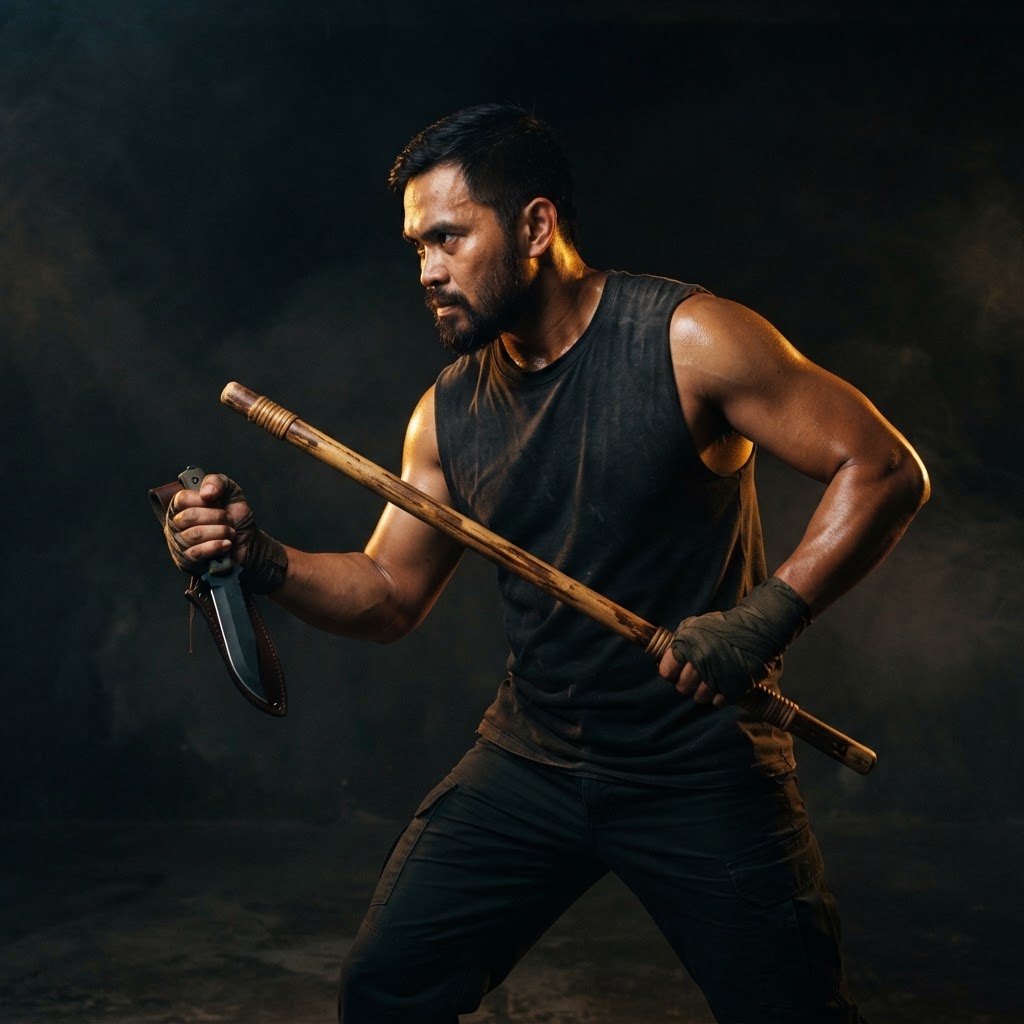
Hoi Fa Siu Lum · Kali · Silat · Pakistani Special Forces
Blade & Staff,
Ancient & Lethal.
A synthesis of Filipino Kali, Southeast Asian Silat, and the close-quarters combat doctrine of the Pakistani Special Forces. Three traditions — one complete and uncompromising weapons system forged for reality.
Three Traditions
The Sources of the System
01
Filipino Kali (Arnis)
The blade-first fighting art of the Philippines. Kali practitioners train with weapons before empty hands — understanding that the body moves the same whether armed or not. Renowned for its flow drills, single and double stick, and devastating knife work developed across centuries of inter-island warfare.
02
Southeast Asian Silat
The indigenous martial art of the Malay archipelago — Indonesia, Malaysia, Brunei. Silat is characterised by deceptive footwork, low stances, swift takedowns, and blade integration that is inseparable from its empty-hand techniques. Every movement conceals a weapon application.
03
Pakistani Special Forces CQC
Close-quarters combat doctrine refined under live operational conditions. The Pakistani SSG curriculum strips away ceremony and trains combatants to neutralise armed threats at extreme proximity — knife defence, disarms, weapon retention, and immediate lethality under pressure.
Curriculum
Modules of the System
Kali
Single Stick (Solo Baston)
Foundation of Flow
The entry point of the system. Single stick training develops timing, range management, and the flowing sensitivity that underlies all Kali-based weapon work. Strikes, blocks, and disarms are drilled until they become reflex.
Kali
Double Stick (Doble Baston)
Ambidextrous Power
Simultaneous coordination of both hands — each striking, each defending, each feeding the other. Double stick training breaks the dominance of one side and builds a practitioner who is equally dangerous from either hand.
Kali · Silat
Blade Work & Edged Weapons
The Razor Tradition
From the Philippine bolo to the Malay kerambit, blade culture runs deep in both Kali and Silat. This module trains the practitioner in offensive blade deployment, passing, and the footwork patterns unique to edged-weapon encounters.
Pakistani SF · Kali
Knife Defence & Disarms
Survival Under Pressure
Drawn directly from military close-quarters doctrine and Kali's "defanging the snake" methodology. How to survive, redirect, and disarm an armed attacker at zero distance — trained under stress, not comfort.
Silat
Silat Footwork & Entries
The Art of the Angle
Silat contributes its unique triangular footwork, low evasions, and deceptive entries that allow the practitioner to move off the line of an attack and counter simultaneously — with or without a weapon in hand.
Pakistani SF
Weapons Retention & CQC
Operational Reality
The special forces contribution: how to keep your weapon under grappling pressure, transition between weapons, and operate in extreme close quarters where traditional martial ranges collapse entirely.
Lineage
Masters of the Blade Tradition
Ancient Malay & Filipino Warriors
Pre-colonial blade traditions across the archipelago · 10th century onward
Lapu-Lapu
Chieftain of Mactan · Defeated Magellan using indigenous fighting arts · 1521
Floro Villabrille
Grandmaster of Pekiti Tirsia Kali · Brought Filipino blade arts to global prominence
Dan Inosanto
Bruce Lee's student · Foremost Western ambassador of Kali/Escrima · Synthesised Filipino arts for modern training
Silat Masters of Java & Sumatra
Preserved Pencak Silat through oral tradition and pesantren schools · 12th–20th century
Pakistani SSG Instructors
Special Services Group · Elite close-quarters doctrine refined through decades of operational deployment

